Atlas Climbing
WordPress LMS demo for a fictional climbing-gym chain — real enrollment, lesson completion and a logged-in dashboard on Tutor LMS Free, rebuilt in 2026 against the Atlas Climbing design system.
Overview
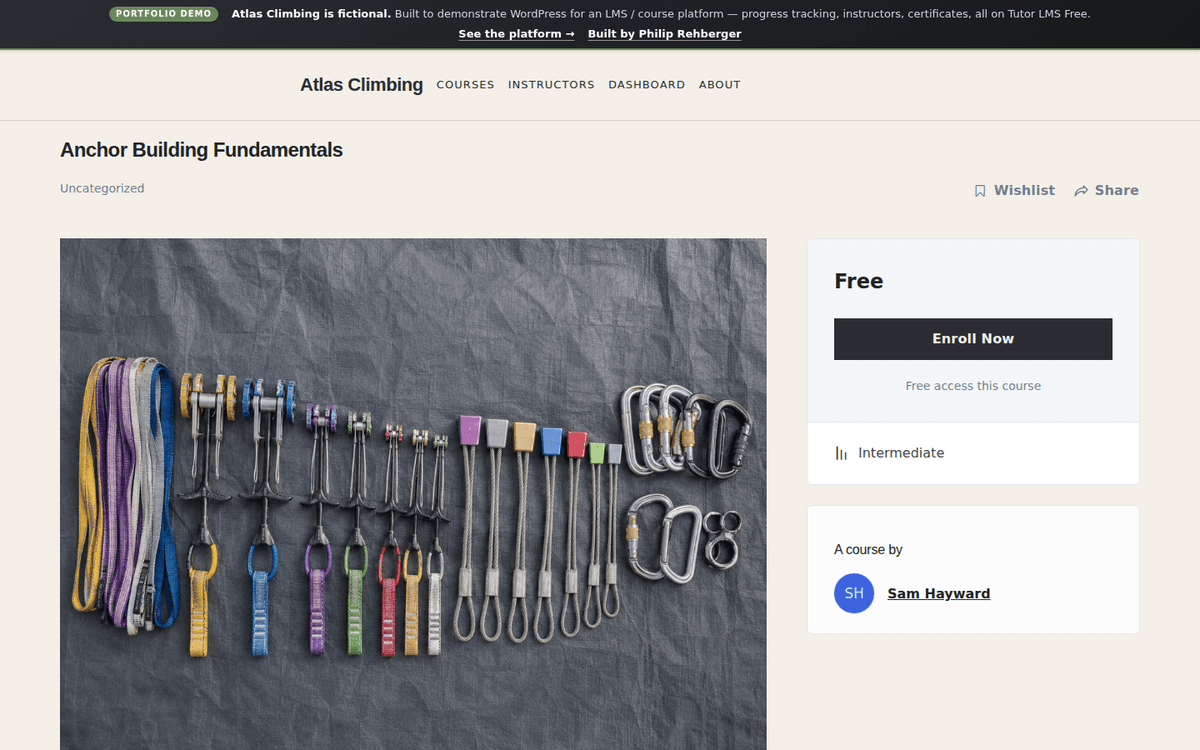
A WordPress LMS site for a fictional small-chain indoor climbing gym — five-page structure (Home, Courses, Instructors, Dashboard, About) plus three single-course pages, fifteen lessons, three quizzes, all running on Tutor LMS Free with a custom per-demo theme. Fourteenth demo on the platform and the first of the Tier 2 batch (heavier, architecturally diverse demos following the Tier 1 service-business breadth run).
Per-demo theme — outdoor brand grown up:
- Thin child of the platform
_chassisparent - Granite charcoal primary (#2A2D31), lichen-green accent (#6B8A5A), chalk-white base (#F4F0E8), dawn-pink secondary (#E8B4A0)
- Inter Display headings, Inter body, JetBrains Mono for code
- References Patagonia.com and Black Diamond product pages, not Crossfit affiliate sites
- Header carries Courses / Instructors / Dashboard / About; footer carries brand + locations + colophon
Two new shared blocks in the platform's sfp-blocks library — neither Atlas-specific:
sfp-blocks/course-card— server-rendered grid that queries any course CPT (defaults to Tutor'scourses) and renders cover, level badge, instructor row, lesson count, duration, enroll CTA. Filterable by featured-meta, level-meta, and course-category taxonomysfp-blocks/lesson-progress— student-dashboard block that lists the logged-in user's enrollments with progress bars + next-lesson CTAs, sourced from Tutor'sget_completed_lesson_count_by_courseandget_lesson_count_by_course. Logged-out visitors see a sign-in CTA; users with no enrollments see a configurable empty message
Five pages + LMS content:
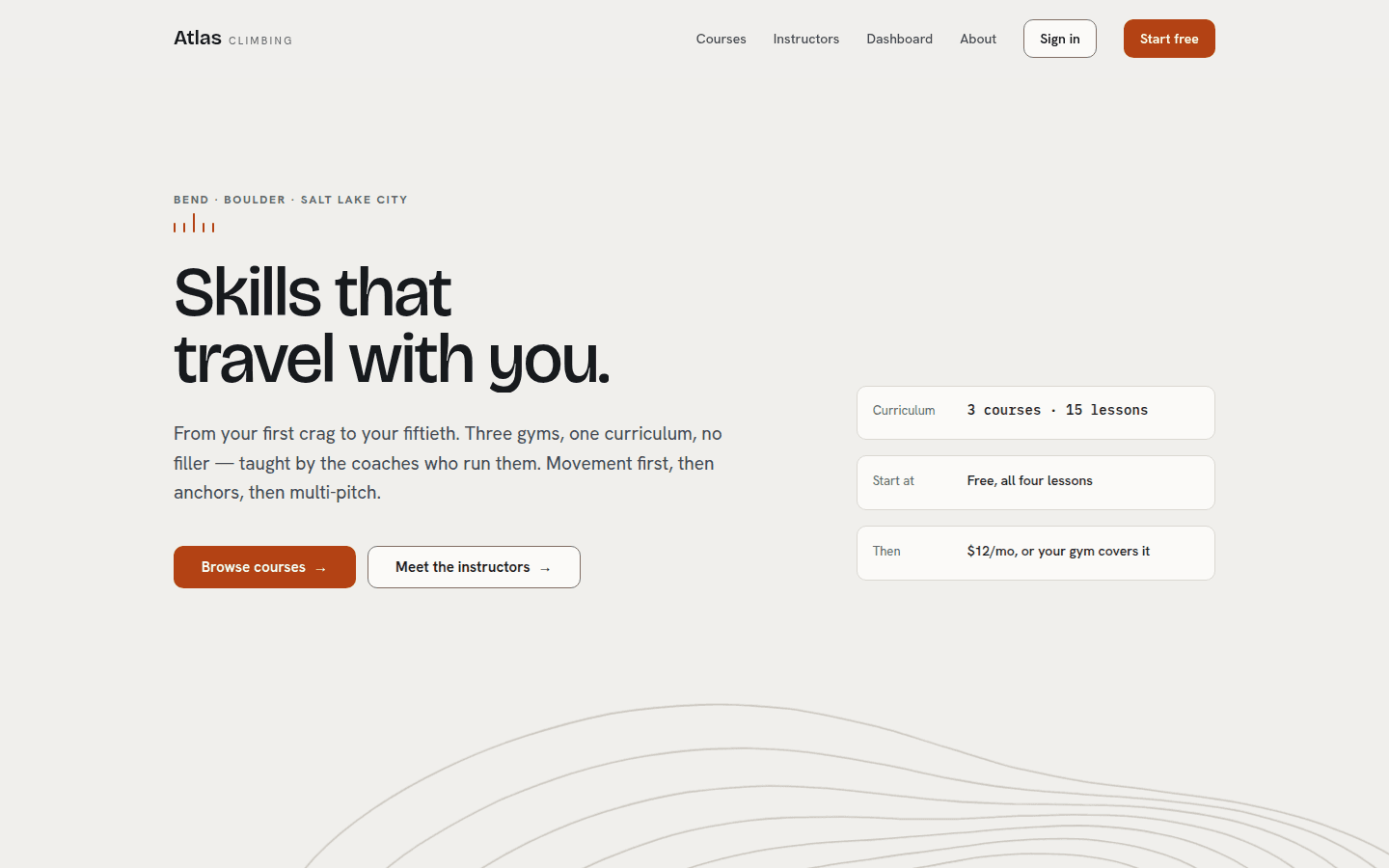
- Home — Full-bleed hero (climber on slab), eyebrow naming the three locations, single declarative headline, featured-courses strip via
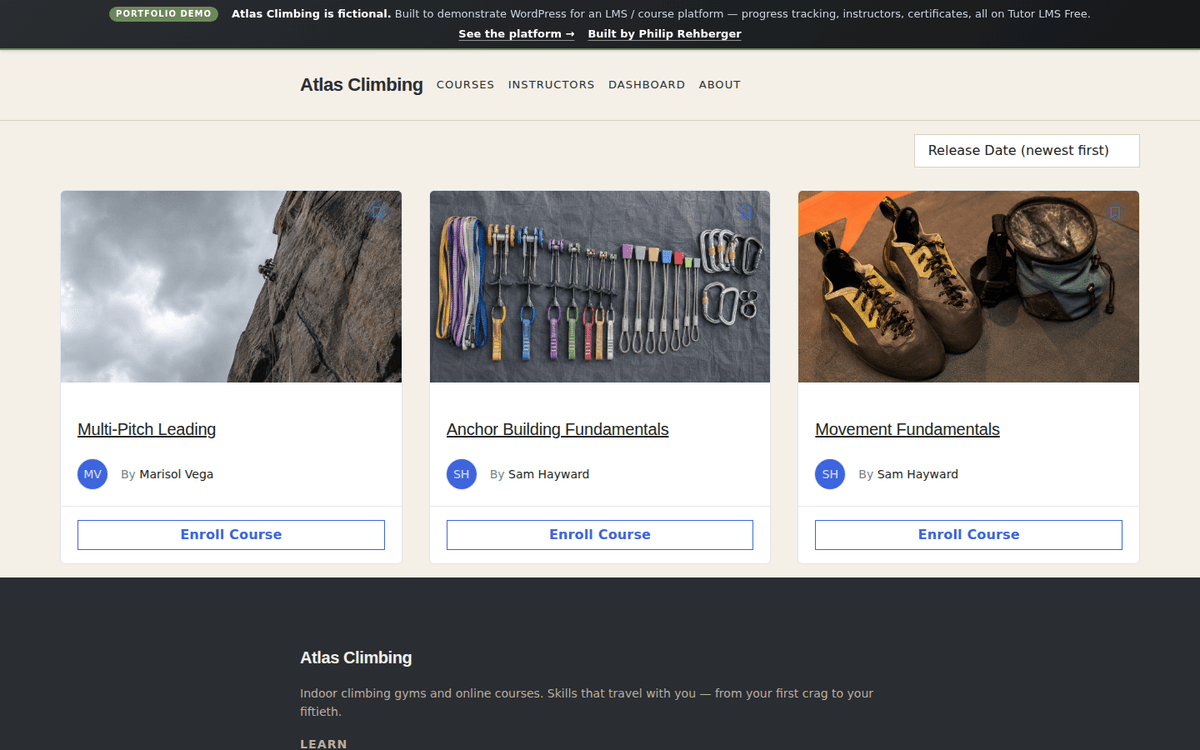
course-cardwithfeaturedOnly=true, instructor strip, free-to-start CTA that names the pricing explicitly - /courses/ — Themed Tutor archive showing all three courses with level badges + instructor + duration + enroll CTAs
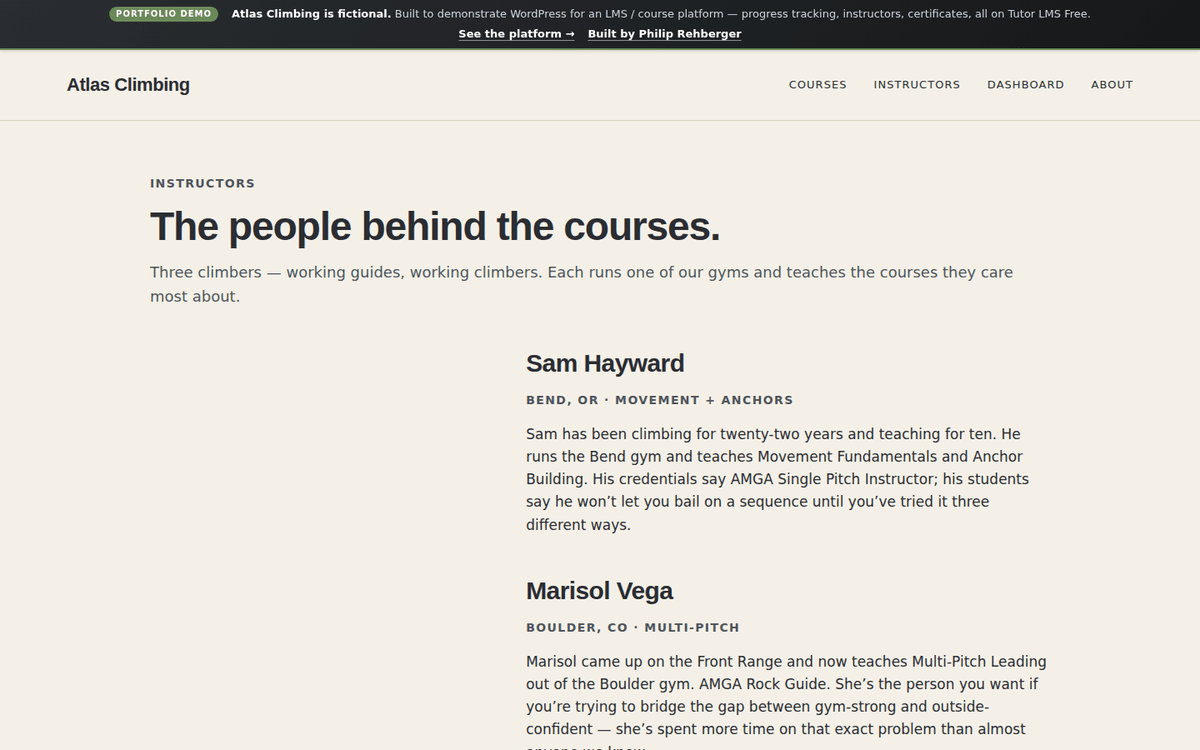
- /instructors/ — Three instructor cards with portraits, datelines, and bios that name credentials and pedagogical style
- /dashboard/ — The
lesson-progressblock. For the seededdemo-studentthe dashboard shows three enrollments at 100% / 60% / 0% with certificate available on the completed course - /about/ — Three-section brand story, explicit anti-pattern stance ("we don't have a Tier 3 add-on"), three location cards
Surgical Tutor LMS theming + asset hygiene:
The atlas-tutor-setup mu-plugin registers _atlas_* meta with REST + closure-wrapped sanitize_callbacks (PHP 8 strict-arity safety), tunes Tutor settings for the demo (free monetization, disabled emails, registration enabled), and dequeues Tutor's ~120KB of CSS+JS on non-Tutor routes — Lighthouse perf went from 66 to 91 from that one change. CSS overrides target stable Tutor class names (.tutor-btn, .tutor-course-topic, .tutor-progress-bar) rather than nested div chains — the rule we'd defend on any third-party plugin theming engagement.
The Challenge
Coaches, gyms, training programs, and course creators reach for LearnDash by default ($300+/year) without knowing Tutor LMS Free covers 90% of what they need. The deeper mistake is letting the LMS plugin own the visual identity — the default Tutor archive, single-course page, and dashboard read as Tutor, not as your brand. Most demos shipping Tutor accept that and move on.
The Solution
A per-demo theme with the "summit" outdoor-brand aesthetic baked in, two new shared blocks (course-card + lesson-progress) authored in the platform repo and available to every future LMS demo, and surgical Tutor template overrides via conditionally-loaded CSS that targets stable plugin class names. The setup mu-plugin dequeues Tutor assets on non-Tutor routes — same dequeue pattern bench uses for PMS, the platform-wide default for any demo with a heavy frontend plugin.
Results
307 automated checks covering the design handoff's definition of done — five pages at three widths in both themes, reduced motion, JavaScript disabled, keyboard operation, and a grayscale check that no lesson state is signalled by colour alone
Lighthouse on the live site: 100 / 100 / 100 / 100 on desktop for the homepage and the instructors page, and 81 / 100 / 100 / 100 under the platform's own weekly run on Lighthouse's default mobile profile. The earlier build scored 66 on performance with Tutor loading its assets on every page; a conditional dequeue lifted it 25 points without touching the design
Two new shared blocks —
course-cardandlesson-progress— join the platform sfp-blocks library, available to every future LMS / course-creator client, not just AtlasSample student account demonstrates the full progress-tracking flow end-to-end: enroll, complete lessons, advance to next, complete course, certificate available. The dashboard renders three distinct states (100% / 60% / 0%) from one block instance
Surgical-CSS-override pattern for third-party plugin theming documented in writing: target stable plugin class names (not nested div chains), load conditionally on plugin routes only, dequeue assets on routes the plugin does not render
Fourteenth demo on the platform; first of the Tier 2 batch (architectural diversity rather than service-business breadth). The platform now has LMS primitives ready for the next coach / gym / training-program client
Gallery